Northern lights husky tours from Tromsø
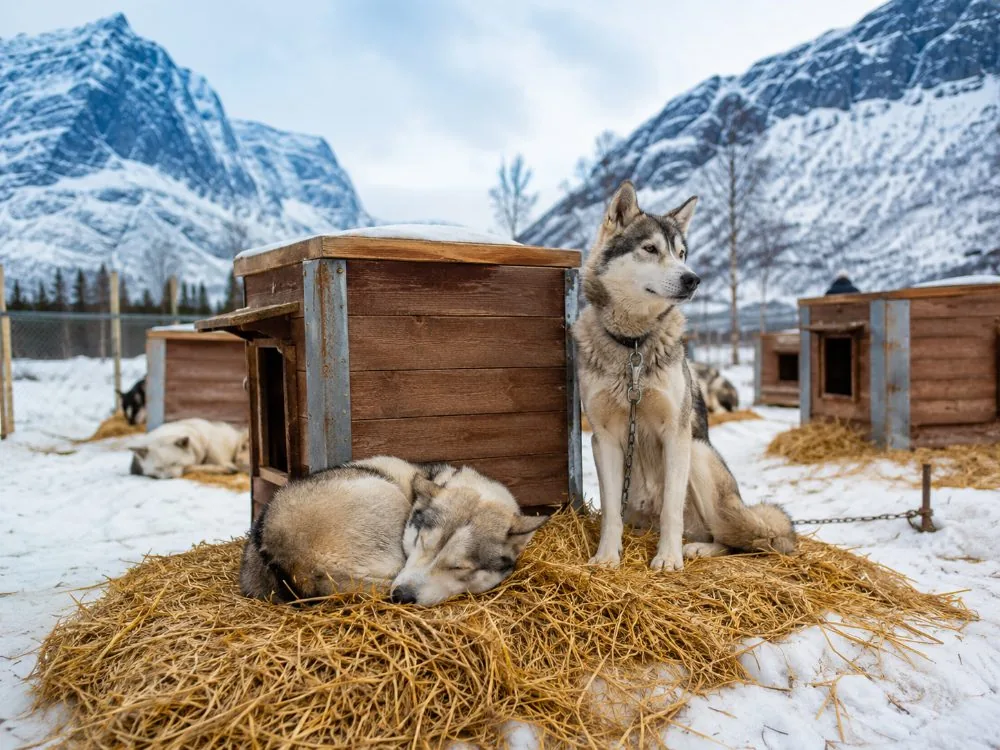
Why a camp helps, and what it cannot do
Tromsø lies directly beneath the auroral oval, which means the city does not depend on big geomagnetic storms the way places further south do. Increased solar activity expands the oval outwards; directly underneath it, that expansion changes little. What you are fighting here is not activity. It is cloud and streetlights.
A husky camp deals with the second problem completely and the first one partly. Camp Tamok is 80 to 95 minutes inland, well away from the city’s light pollution, in a valley whose winter air is dry and continental — typically −10 to −20 °C, with little precipitation and little humidity. That is a genuinely better sky than a harbour-side hotel balcony. But a camp is a fixed location. A dedicated chase tour by bus or minibus can drive for hours to find a hole in the cloud; this tour stays where the dogs are. On a clear night the camp wins. On a socked-in night it does not.
What you are actually buying
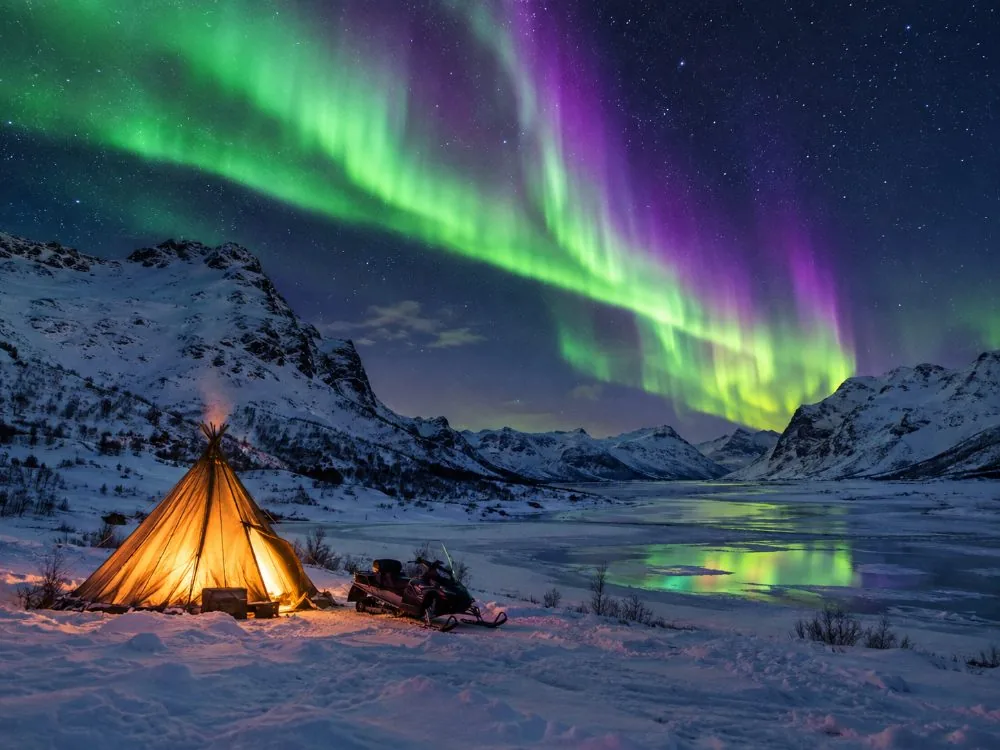
Book this for the evening, not for the lights. You get the bus out, thermal suits, guided dog sledding with mushers driving the teams, then the camp lounge for a two-course traditional dinner and a talk on the science behind the aurora, then a snowmobile excursion with shared machines and turns at the handlebars, with professional aurora portraits shared within 48 hours. If the sky stays shut you have still had all of that. Nathalie from France listed exactly those parts — the scenery, the equipment, the guides, the meal, the dogs — and that is the right way to read the product.
 Evening & aurora
Arctic All-in-One Night: Dog Sledding, Snowmobiling & Aurora
 Full day inland
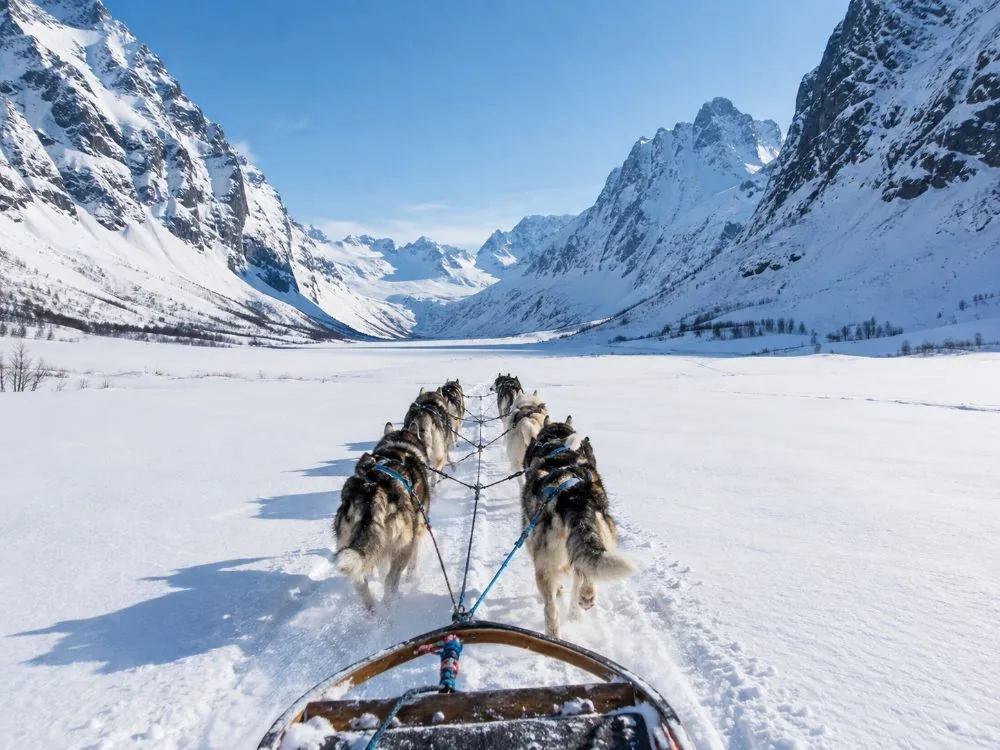
Dog Sledding Adventure in Tamokdalen
 Most demanding
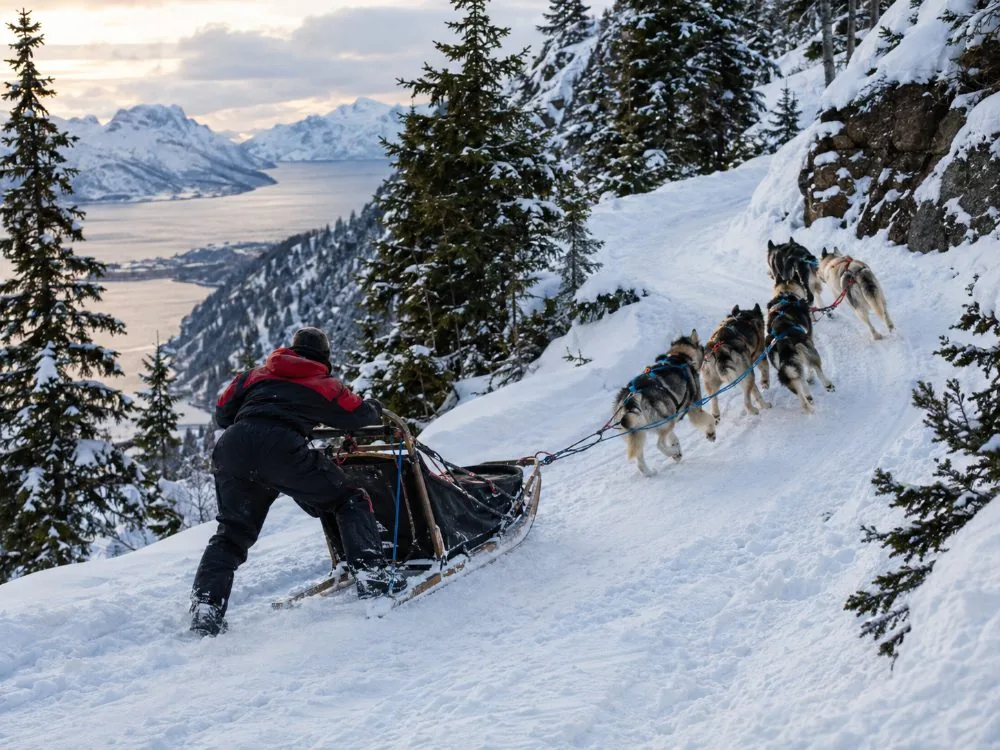
Advanced Dog Sledding Tour at Camp Tamok
Honest odds
There is no official visibility percentage for Tromsø from UiT or the Tromsø Geophysical Observatory, and anyone quoting you one as science is selling something. What exists is amateur record-keeping. One independent Tromsø observer’s season log recorded lights on 82% of nights in 2025/26, 70% in 2024/25 and 72% in 2023/24, with monthly figures for 2025/26 running 90% in September, 77% in October, 90% in November, 77% in December, 87% in January, 89% in February, 71% in March and 65% in April. That is one person’s personal log, and the observer themselves calls its scientific value debatable. Treat it as a reason not to despair rather than as a forecast.
Season matters more than any number. Aurora season runs from late August to early April whenever the sky is dark and clear enough, and activity is often strongest between about 20:00 and 02:00. Husky season on snow runs November to April, and every product in the six-tour line-up sits inside it. The overlap is the whole winter, and inside it the polar night from 28 November to 14 January gives you darkness at almost any hour — which is its own subject on the polar night page.
What works
- Dark inland sky, well away from Tromsø’s streetlights
- Dry continental air in the Tamok valley
- Dinner, sledding and the snowmobile run happen whatever the sky does
- Aurora photographs taken by the guides and shared afterwards
Worth knowing
- Fixed location, so no chasing clear sky
- 174 reviews is a much smaller sample than the day tours
- Ten hours door to door, with about three of them on a bus
- 16 and over, minimum 130 cm, and you must help push the sleds
If the aurora is your real priority and the huskies are the extra, book the husky night early in your stay and keep a later evening free for a dedicated chase tour. One clear night is worth more than two hopeful ones.
The daytime alternative nobody mentions
In December Tromsø averages 0.0 hours of sun above the horizon and January averages 1.8. A so-called daytime tour in that window runs in blue twilight, roughly between 09:00 and 14:00. It is beautiful, it photographs strangely well, and it is not daylight. Booking a 7-hour Tamokdalen day in midwinter puts you in the same dark inland valley for a fraction of the evening tour’s length; see the full-day page. It is not sold as an aurora tour and should not be booked as one, but the sky above it is the same sky.
Frequently asked questions
Can you see the northern lights on a husky tour?
You can, and people do, but no operator can promise it. The evening tour at Camp Tamok is built around the possibility: dark inland sky, a science talk and a snowmobile run out to watch and photograph. Sightings can never be guaranteed anywhere in the Arctic.
Is a husky camp better than a northern lights chase tour?
Different tools. A camp gives you darkness and a dry inland sky but stays put; a chase tour can travel for hours by bus or car to find clear sky. If the forecast is broken cloud, the chase tour has the advantage.
What time do the northern lights appear?
Activity is often strongest between about 20:00 and 02:00, through a season running late August to early April. During the polar night it is dark enough at almost any hour, which is why midwinter day tours can also run under a black sky.
Is the evening husky tour suitable for children?
No. It is 16 and over, with a minimum height of 130 cm and a weight limit of 120 kg, and participants must help push the sleds. Families should start at the family page instead.